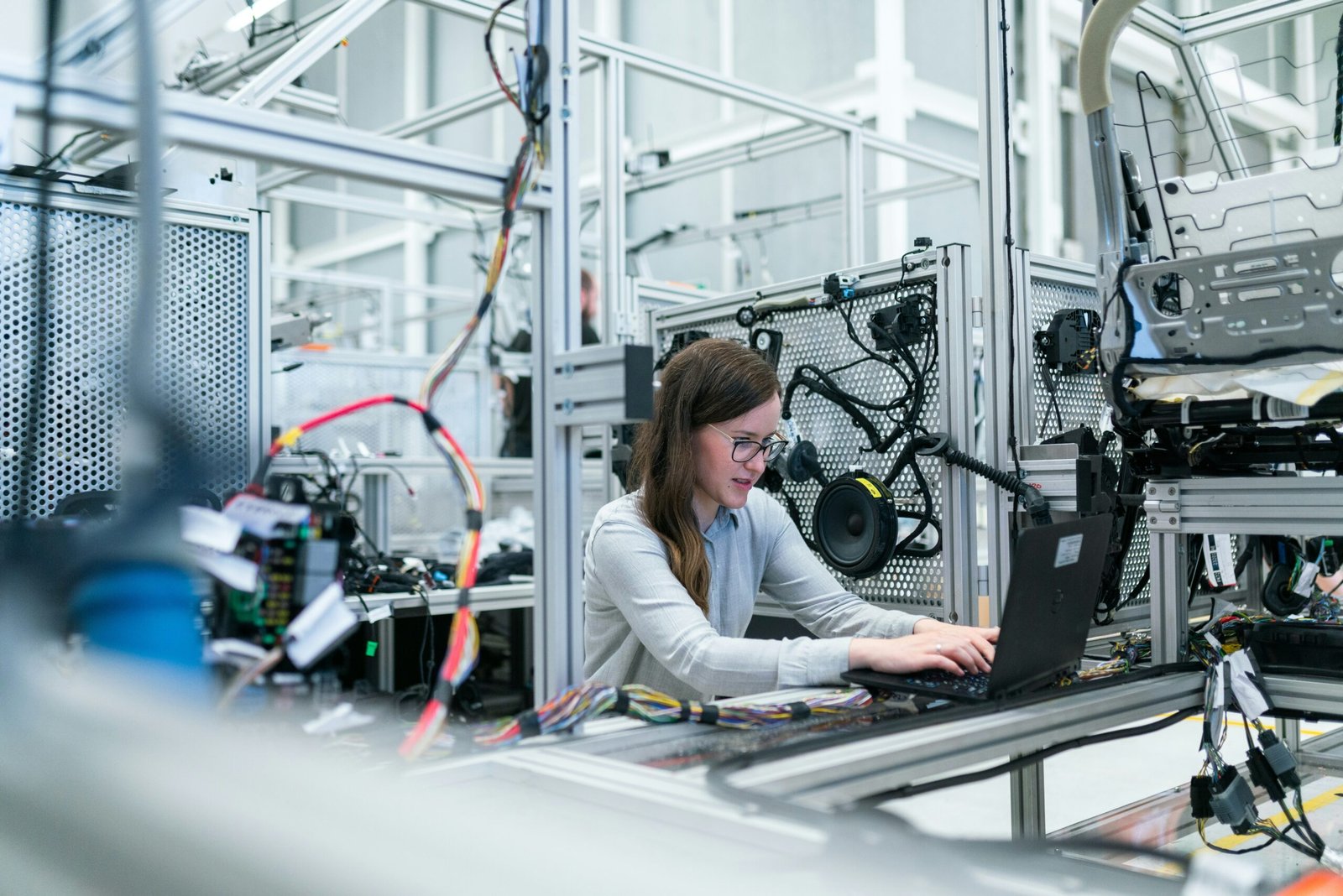
Artificial intelligence may appear to be driven primarily by software, but the real engine behind the AI revolution is hardware.
As AI models become larger and more capable, the demand for computational power has exploded.
This shift transformed advanced AI hardware into one of the most strategically important resources in the global economy.
Many analysts now compare AI chips and computing infrastructure to oil during the industrial era.
The Hidden Infrastructure Behind AI
Every major AI model depends on enormous amounts of computing power.
Training modern large language models requires:
- thousands of GPUs
- massive energy consumption
- advanced networking systems
- high-speed memory
- large-scale data centers
Without this infrastructure, modern AI systems would not exist.
The rapid growth of generative AI dramatically increased global demand for specialized AI hardware.
Why GPUs Became Essential
Graphics Processing Units (GPUs) were originally designed for video games and 3D graphics.
However, researchers discovered that GPUs were highly effective at performing the parallel calculations required for machine learning.
This made GPUs ideal for:
- neural network training
- deep learning
- computer vision
- generative AI
- scientific simulations
As AI models scaled in size, GPUs became critical infrastructure.
Today, companies compete aggressively for access to high-performance AI chips.
The AI Arms Race
The global AI boom created a new technological arms race.
Major technology companies now invest billions into:
- AI chips
- data centers
- cloud infrastructure
- semiconductor manufacturing
- energy systems
Countries also recognize AI infrastructure as a strategic national asset.
This competition intensified geopolitical tensions surrounding semiconductor supply chains.
Advanced chip manufacturing is concentrated in a small number of companies and regions, making AI hardware both economically and politically important.
Why Data Centers Matter
Most people interact with AI through apps and websites, but the real computation happens inside massive data centers.
Modern AI data centers contain:
- tens of thousands of GPUs
- advanced cooling systems
- specialized networking equipment
- enormous electrical infrastructure
These facilities consume extraordinary amounts of power.
As AI adoption grows, energy demand from data centers is increasing rapidly worldwide.
Some experts believe future AI growth may be limited not by software innovation, but by electricity availability.
The Energy Problem
Training advanced AI systems requires massive energy consumption.
Large-scale AI infrastructure creates several concerns:
- rising electricity demand
- environmental impact
- cooling requirements
- infrastructure costs
This has triggered renewed interest in:
- nuclear energy
- renewable power
- energy-efficient chips
- advanced cooling technologies
AI companies increasingly view energy access as a competitive advantage.
Specialized AI Chips
The AI hardware industry is evolving quickly.
Companies are now designing specialized accelerators optimized specifically for artificial intelligence workloads.
These chips aim to improve:
- efficiency
- inference speed
- training performance
- power consumption
The shift toward custom AI hardware may reshape the entire semiconductor industry.
Why AI Hardware Is Strategic
Control over advanced AI hardware influences:
- economic competitiveness
- military capabilities
- scientific research
- automation capacity
- technological leadership
For this reason, governments increasingly treat semiconductor technology as a national security priority.
The ability to produce advanced chips may determine which countries dominate future AI development.
The Future of AI Infrastructure
As artificial intelligence becomes integrated into daily life, demand for AI hardware will continue growing.
Future developments may include:
- more efficient chips
- distributed AI systems
- edge computing
- AI-specific operating systems
- robotics hardware integration
The next phase of the AI revolution will not depend only on smarter models.
It will also depend on who controls the infrastructure powering them.
In the modern technological economy, AI hardware has become one of the world’s most valuable strategic resources.
Introduction to Robotics
Robotics is a multidisciplinary field that encompasses the design, construction, operation, and use of robots. A robot can be defined as an automated machine capable of performing tasks traditionally carried out by human beings. These machines can be programmed to carry out a wide array of functions, ranging from simple repetitive tasks to complex decision-making processes. Currently, various types of robots are in use across different industries, including industrial robots, service robots, and collaborative robots. Industrial robots are primarily employed in manufacturing settings, executing tasks like welding, painting, and assembly, while service robots cater to personal and commercial needs, assisting in areas such as healthcare, hospitality, and logistics.
The journey of robotics began with basic mechanical devices, where early inventors created simple machines capable of limited functions. Over the decades, the field has evolved dramatically, particularly since the mid-20th century. Key milestones in robotics history include the introduction of the first industrial robot, Unimate, in the 1960s, and the subsequent development of programmable logic controllers (PLCs). These advancements spurred the adoption of robots in various sectors, leading to increased efficiency and precision in work processes.
Modern robotics integrates artificial intelligence (AI) and machine learning technologies, enhancing robots’ capabilities to adapt and learn from their environments. This transition marks a significant leap forward, allowing robots to make decisions based on sensor input and operate autonomously in unpredictable settings. At the core of today’s robots are essential components such as sensors, which gather data about the surroundings, actuators, which convert energy into motion, and control systems that govern the robot’s operations based on programmable instructions. Collectively, these elements form the backbone of robotics, ensuring that these machines perform their designated tasks effectively and safely.
Applications of Robotics Across Industries
Robotics has seen exponential growth and implementation across various sectors, significantly altering how industries operate. Manufacturing is one of the earliest adopters of robotics, utilizing automated systems to enhance productivity. For instance, automotive manufacturers like Tesla and Ford employ robotic arms to perform tasks such as welding and assembly, resulting in reduced human error and increased output rates. Statistics indicate that these robots can work continuously, providing a substantial boost to efficiency.
In the healthcare sector, robotics is leading to remarkable improvements in surgical precision and patient care. Surgical robots, such as the da Vinci Surgical System, allow for minimally invasive procedures, enhancing recovery times while minimizing the risk of complications. According to studies, surgeries performed with robotic assistance have shown a decrease in patient recovery periods by as much as 20%. This precision not only elevates the quality of care but also significantly increases surgical outcomes.
Agriculture is experiencing a transformation through the integration of robotics, particularly in crop harvesting and monitoring. Drones and autonomous harvesting machines are being deployed to increase yield efficiency and minimize labor costs. A study revealed that farms using robotic systems for harvesting can increase productivity by over 30%, significantly impacting food supply chains. These robots are equipped with sophisticated sensors that analyze crop health and soil conditions, providing data that assists farmers in making informed decisions.
The service industry is also embracing robotics, particularly in customer interaction and support roles. Robots like Pepper and Sophia have been developed to engage with customers in retail environments, enhancing the shopping experience through personalized interaction. Research shows that 70% of customers appreciate robotic assistance, which improves service efficiency while allowing human employees to focus on more complex tasks.
Overall, the diverse applications of robots across industries reveal their potential in enhancing efficiency, safety, and productivity. The impact of robotics is not only reshaping conventional roles but also paving the way for innovation and advancements across sectors.
Challenges and Ethical Considerations in Robotics
The robotics industry is currently navigating a multitude of challenges that impact its growth and integration into various sectors. One prominent challenge is the technical limitations of current robotic systems. Despite significant advancements, many robots still struggle with tasks that require fine motor skills or complex decision-making akin to human capabilities. These limitations hinder their widespread adoption in industries that necessitate high precision and adaptability, such as healthcare and manufacturing.
Additionally, the high costs associated with the development and implementation of robotic technologies continue to be a barrier for many businesses. Investing in robotics often requires substantial financial resources for research, development, and maintenance. For small and medium enterprises, these costs can be prohibitively high, slowing down the overall pace of robotics integration into their operations.
As robots gradually take over tasks previously performed by humans, there is an urgent need for workforce retraining. This transition poses considerable risks to employment, with many workers facing job displacement in sectors such as manufacturing and logistics. Ensuring that affected individuals have access to retraining programs is crucial for fostering a smooth transition into new roles that may emerge alongside advancements in robotics.
Ethical considerations also play a significant role in the ongoing discourse surrounding robotics. The implications of automation on employment necessitate a thoughtful approach to how society values human labor. Moreover, the rise of surveillance robots has raised privacy concerns, as these technologies could potentially infringe on individual rights. Furthermore, the development of autonomous weapons presents moral dilemmas regarding accountability and the potential for misuse in conflict scenarios. These ethical challenges underscore the need for comprehensive frameworks that govern the integration of robotic technologies into society.
In conclusion, addressing these challenges and ethical considerations is essential for ensuring that advancements in robotics are aligned with societal values and that they contribute positively to the future of industries.
The Future of Robotics: Trends and Innovations
The future of robotics is poised for significant transformation, characterized by emerging trends and groundbreaking innovations that will redefine industries and enhance everyday life. One of the most notable advancements is the integration of artificial intelligence (AI) within robotic systems. AI-driven robots possess the ability to learn from their environments and adapt their behavior, making them more efficient and effective in various applications. This evolution will likely lead to a new era of autonomous systems capable of sophisticated decision-making processes, further penetrating sectors such as healthcare, manufacturing, and logistics.
Another trend gaining momentum is the proliferation of collaborative robots, commonly referred to as cobots. These robots are designed to work alongside humans, augmenting their capabilities and improving productivity while ensuring a safe working environment. Cobots are becoming increasingly prevalent in factories, warehouses, and even retail spaces, working in harmony with human workers to streamline operations and reduce the risk of errors. This collaborative approach ensures that human expertise is complemented by robotic precision, fostering a new paradigm in labor dynamics.
The role of robotics is also expanding into the realm of smart cities and autonomous vehicles. As urbanization intensifies, cities are leveraging robotic technologies for efficient management of resources, traffic control, and public safety. Autonomous vehicles, equipped with advanced sensors and AI algorithms, promise to revolutionize transportation systems by providing safer and more reliable travel options. Furthermore, these technologies will not only enhance mobility but also contribute to cleaner urban environments through better traffic flow and reduced emissions.
Speculating on the evolution of human-robot interaction reveals a future where communication and collaboration become increasingly intuitive. Advances in natural language processing and emotion recognition will enhance the way humans and robots communicate, leading to more personalized and efficient interactions. As robotics becomes further integrated into daily life, the societal impacts will be profound, raising important questions about ethics, employment, and the nature of human relationships with machines. The trajectory of robotics will undoubtedly continue to shape our future in unprecedented ways.